


In every hospital, there are nurses who change care one patient at a time. And then there are nurses who change the system itself.
Some do it loudly. Others do it quietly.
As part of Nurse Approved’s Black History Month series, The Unseen Shifts — How Nurses of Color Have Quietly Changed Healthcare Systems, we are highlighting leaders whose impact may not always be visible at the bedside, but whose work reshapes how care is delivered.
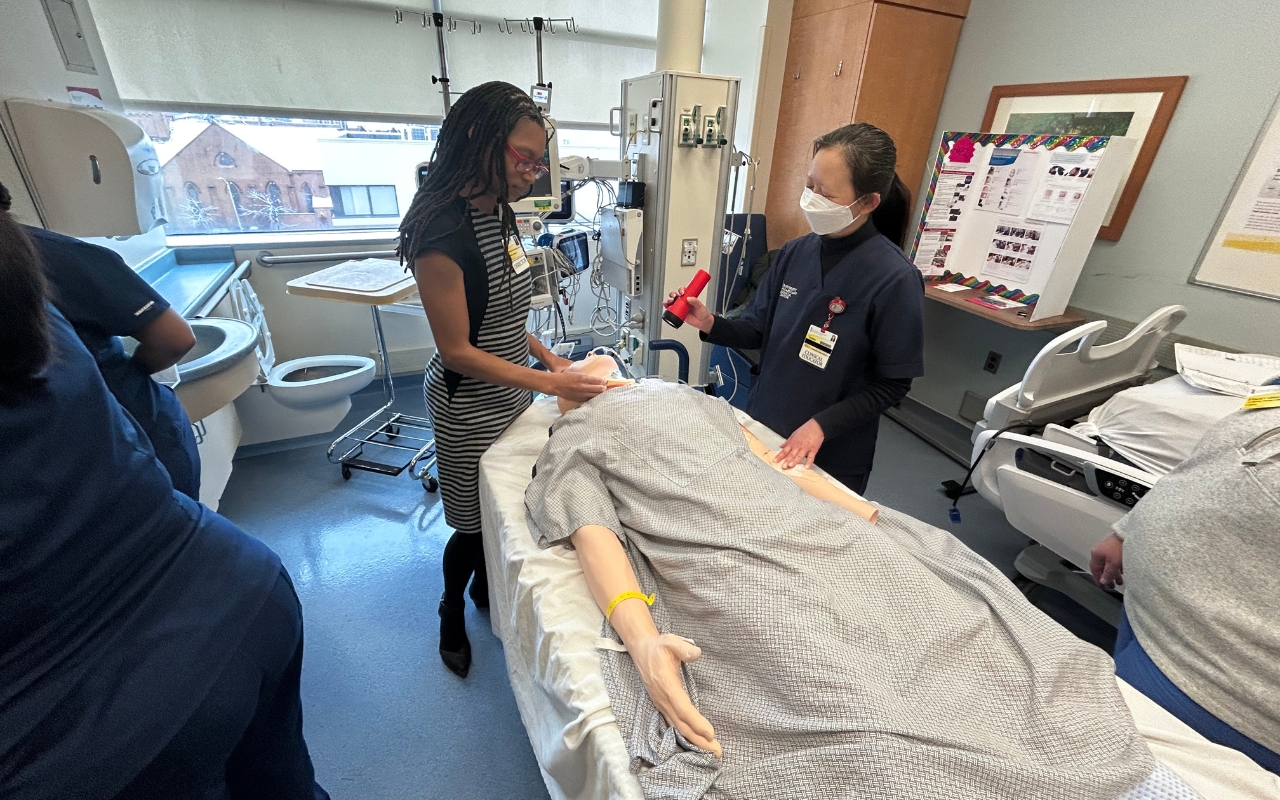
At the University of Maryland Medical Center, Gyasi Moscou-Jackson, PhD, MHS, RN, is leading one of those quiet revolutions. As Director of Nursing Inquiry and Chair of the University of Maryland Medical System Nursing Research and Evidence-Based Practice Council, her work may not always be visible at the bedside. But it shapes how care is delivered across units, campuses, and leadership tables.
This is the kind of leadership that defines The Unseen Shifts.
Drawn to the Power of Evidence
From early in her academic journey, Moscou-Jackson was drawn to evidence. As an undergraduate, she conducted laboratory research on aging mechanisms in fruit flies. Later, during her Bachelor of Nursing program, she explored workplace and domestic violence.
Curiosity became calling.
Encouraged by mentors who recognized her aptitude for inquiry, she pursued a PhD in nursing. Yet even during doctoral training, she knew her work would extend beyond traditional academia. She wanted to remain close to clinical practice and real-world impact.
More than six years ago, she discovered the role of the clinically based nurse scientist. It offered the balance she sought: educator, clinician, and systems leader. It allowed her to influence care through evidence while staying grounded in the realities of frontline nursing.
Aligning Inquiry With What Matters
In her role at UMMC, Moscou-Jackson works directly with nurse residents, frontline nurses, and EBP fellows to translate practice observations into structured inquiry.
The process begins with data.
Before a project is launched, nurses review unit, division, and hospital-level metrics alongside existing literature to identify validated gaps or improvement opportunities. Aligning inquiry with organizational priorities increases the likelihood of measurable outcomes, strengthens leadership support, and ensures access to critical resources
UMMC nurses have led initiatives focused on safety culture, nurse-patient communication, patient-centered care, workplace wellness, and reducing readmissions. When nurses see their projects tied to system priorities, they recognize the broader impact of their work.
That alignment transforms engagement into momentum.
When Evidence Becomes Culture
Evidence-based practice is often described conceptually. Moscou-Jackson has focused on embedding it structurally.
Over a five-year period, UMMC increased the visibility of nursing inquiry across campuses, launched an EBP fellowship, added an EBP Coordinator, and introduced supports, including an online inquiry project management platform and Writing Accountability Groups.
A subsequent five-year reassessment of self-reported competency in the EBP process revealed measurable growth. Team members reported greater confidence in foundational EBP steps than five years earlier.
For Moscou-Jackson, the significance went beyond self-reported scores. Projects were increasingly aligned with system priorities, conducted rigorously, measured meaningful outcomes, and resulted in sustainable change.
The shift was cultural.
From Consumer to Driver of Change
As leader of the EBP Fellowship, Moscou-Jackson has witnessed nurses redefine how they see themselves.
Participants often begin with general awareness that evidence should inform care. Through the year-long fellowship, they learn how to formulate precise questions, evaluate literature critically, and implement evidence-driven solutions.
By the program’s conclusion, many no longer identify solely as consumers of research. They see themselves as drivers of inquiry and change. Several return as mentors, expanding the organization’s collective capacity for evidence-based practice.
Transformation at the individual level fuels transformation at the system level.
Nurse-Led Scholarship and Zero Harm
High Reliability and Zero Harm are ambitious goals. Moscou-Jackson believes nurse-led scholarship is central to achieving them.
Nurses routinely develop creative solutions to daily care challenges. When paired with rigorous inquiry and shared broadly, that innovation strengthens the scientific foundation for safer systems.
She acknowledges the tension between operational urgency and research timelines. In one example, the system required a standardized tool to assess nurses’ readiness for practice. Establishing its validity and reliability required time beyond immediate operational needs. The research was ultimately completed, and the team is now preparing for external dissemination.
The impact may not be immediate. Its value is lasting.
Leadership Behind the Scenes
Much of Moscou-Jackson’s leadership involves refining policies, streamlining scholarly review processes, and building infrastructure that supports inquiry.
She believes invisible leadership changes systems, not just individuals.
While bedside care improves lives in the moment, sustainable transformation requires a culture where evidence guides decisions. By cultivating that culture, she strengthens a community of nurses equipped to address complex healthcare challenges and elevate their findings internally and externally.
Navigating Barriers and Expanding Representation
As a woman of color who describes herself as naturally reserved, Moscou-Jackson was not immediately recognized as a leader. Over time, both measurable and immeasurable impacts shifted perceptions, and former skeptics became advocates.
Within academic medical environments where inquiry leadership is often physician-centered, she has worked to establish the value of PhD-prepared nurse scientists. She has also had to demonstrate how evidence-driven leadership contributes to solving hospital pain points, even when not stationed on a unit.
Nationally, nurses of color with PhDs remain underrepresented. According to the 2020 National Nursing Workforce Survey, they account for a small percentage of doctoral-prepared nurses. Groups such as Black PhD Nurse Scientists are working to increase representation and support scholarly success across career stages.
The work of inclusion continues.
Continuing the Lineage
When Moscou-Jackson stepped into her current role, she reflected on becoming the first nurse of color to serve as Director of Nursing Research within her organization and likely one of the few in similar roles nationwide.
She considered the nurses of color who paved the way, often without recognition.
That reflection shapes her leadership. She intentionally creates inclusive spaces for scholarship and elevates nursing contributions within and beyond her organization. For her, contributing to this lineage is about ensuring the path forward is clearer for those who follow.
Stay Curious
For nurses interested in research or evidence-based practice but not themselves researchers, her message is direct.
Advanced degrees are not required to ask meaningful questions.
Every nurse carries a professional responsibility to examine practice and seek innovative ways to deliver reliable, high-quality, safe care. Inquiry begins with curiosity.
Her parting advice is simple.
Stay curious.
