


Estimated reading time: 4 minutes
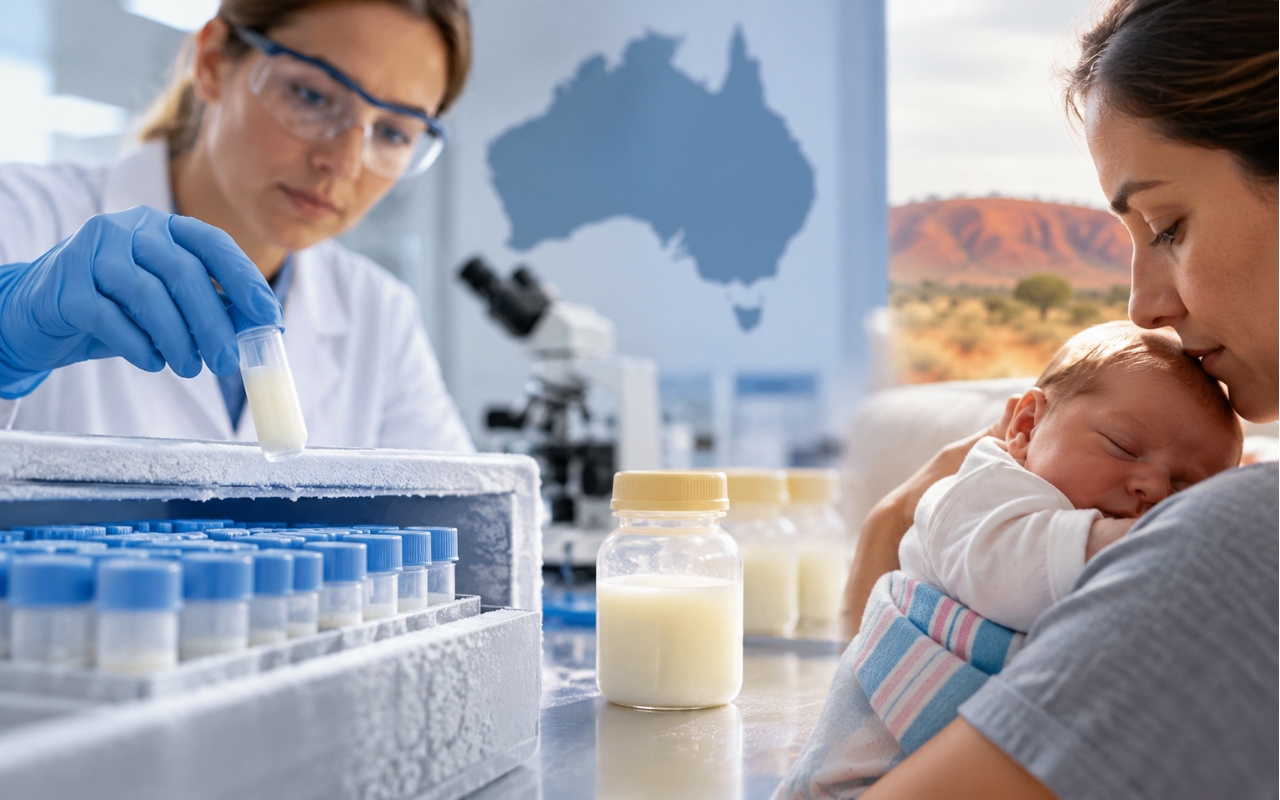
Australia has launched its first human milk biobank, creating a large-scale collection of breast milk samples to advance research into lactation, infant nutrition, maternal health, growth and development.
The WA Human Milk Biobank, housed at The University of Western Australia, has already collected more than 1,000 samples and has capacity for more than 100,000. According to the university, it is Australia’s first human milk biobank and only the third in the world.
For nurses working in maternal-child health, neonatal care, pediatrics, and lactation support, the research could eventually inform persistent clinical challenges, including low milk production, mastitis, infant growth and development, and the relationship between human milk and the infant microbiome.
Why Build a Human Milk Biobank?
Human milk research depends on access to high-quality biological samples, but collecting them separately for individual studies can be difficult and expensive.
Professor Donna Geddes, director of the Center for Human Lactation Research and Translation at UWA and the researcher leading the biobank, said limited access to longitudinal samples has restricted what scientists can study.
“Researchers currently have limited access to valuable longitudinal human milk samples and this is hindering advancements in our understanding of, for example, the impact of human milk composition on the infant microbiome,” she said.
“This in turn is slowing identification of potential therapeutic human milk components, such as probiotics, that could be used as supplements for vulnerable infants or mothers prone to mastitis.”
The new biobank provides a centralized collection of samples that researchers in Australia and internationally can apply to access. Each sample will be divided and stored at minus 80 degrees Celsius, potentially allowing a single donation to contribute to multiple studies.
“The beauty is the milk women so generously donate to us won’t be used for just one purpose – each sample will be divided up and carefully stored in our -80C freezers for use in multiple studies to answer multiple questions,” Geddes said.
“We want to make sure every drop counts.”
Building a More Diverse Picture of Human Milk
One distinguishing feature of the biobank is its effort to collect samples from women across different backgrounds, cultures and geographic environments throughout Western Australia.
Geddes said existing milk collections tend to rely heavily on samples from Caucasian donors, potentially limiting researchers’ ability to understand how human milk may vary across populations and environments.
“Most milk collections source their samples almost exclusively from Caucasian donors,” she said. “Our biobank is designed to capture and make available samples and de-identified data from donors of all backgrounds and cultures, and from different locations including rural and hot climates in remote WA.
“This will enable us to obtain a far more nuanced understanding of the factors affecting human milk composition and production.
“We know, for example, that different ethnicities have different cultural behaviors around breastfeeding or may have different diets that can result in differences in their milk. If we understand these differences, we can make better recommendations around nutrition and environmental exposures.
“Similarly, recruiting women from rural areas and those in areas with extreme heat exposure will give us valuable insights into the impact of temperature and climate on breastmilk composition and production.”
The approach could help researchers examine how factors such as diet, breastfeeding practices, environmental exposures and climate relate to milk composition and production.
Preterm Infants Are a Future Research Priority
Plans for the biobank include collecting samples from mothers of preterm babies, which could be particularly relevant to neonatal nurses and other clinicians caring for premature infants.
Researchers hope to use those samples to better understand barriers to full milk production after preterm birth and how nutrients in human milk affect preterm infants’ growth and development.
“Carrying out these uniquely targeted collections really makes this a one-of-a-kind biobank that will serve as a cornerstone for data-intensive discovery, supporting groundbreaking research and innovation,” Geddes said.
What Nurses Should Know
The launch does not change current breastfeeding or infant-feeding recommendations. Instead, it creates research infrastructure that could help answer unresolved questions nurses may encounter about human milk, lactation and infant health.
Research using the biobank could deepen understanding of low milk production, mastitis, differences in human milk composition and the nutritional needs of vulnerable infants.
For nurses supporting mothers and infants, the value will ultimately be in what researchers learn from those samples and whether those findings translate into better approaches to lactation support, maternal health, and infant care.
