

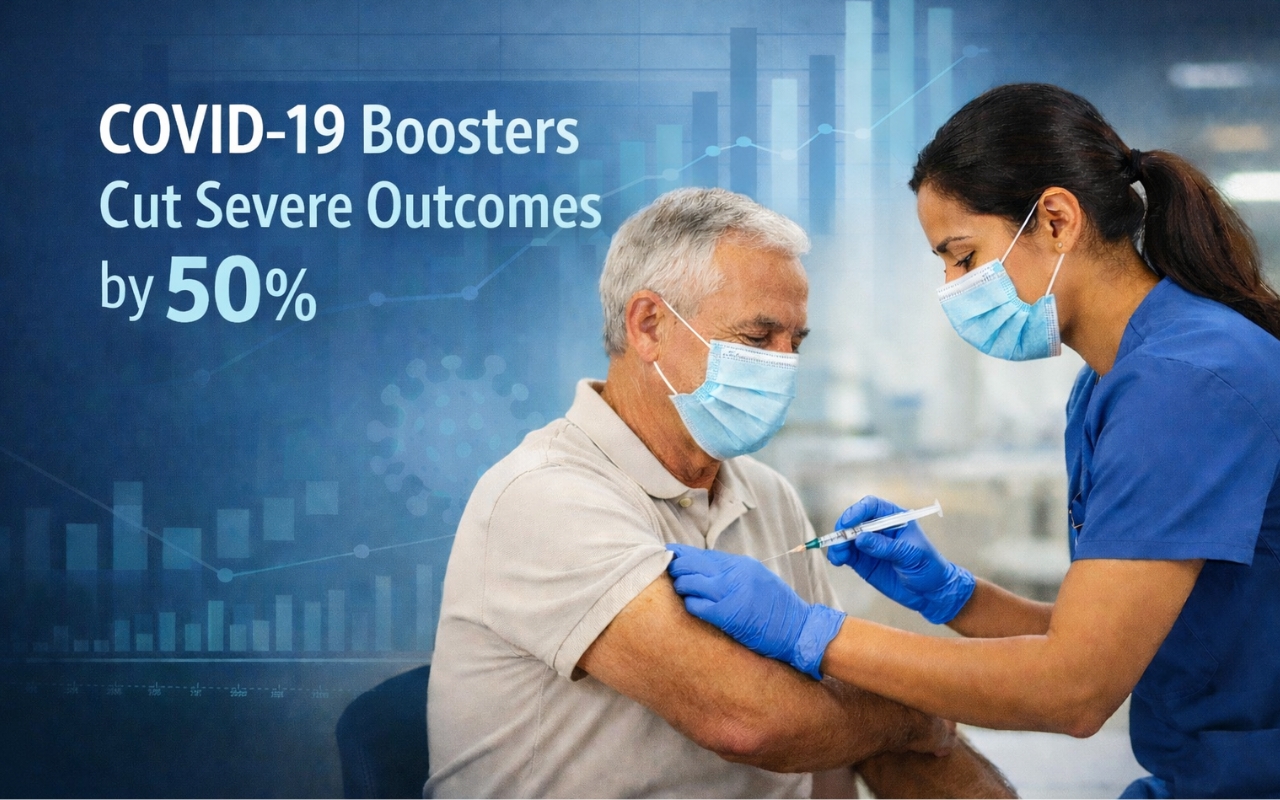

A large real-world study of more than 3 million adults in England confirms what many healthcare professionals have observed in practice: COVID-19 booster vaccinations significantly reduce the risk of hospitalization and death among adults aged 50 and older.
Published in Vaccine on February 18, the study evaluated outcomes from the autumn 2022 booster campaign and found that booster doses were associated with approximately a 50% reduction in COVID-19 hospitalizations and deaths. Protection was strongest in the first 70 days after vaccination and declined over time.
COVID-19 booster vaccines reduced the risk of hospitalization and death by about 50% in adults aged 50 and older, according to a UK study of 3.4 million people. The strongest protection occurred within the first 70 days after vaccination, though effectiveness declined gradually over time.
For nurses and healthcare professionals caring for older adults, the findings reinforce the clinical value of booster vaccination in preventing severe outcomes.
How the Study Was Conducted
The research was led by the University of Bristol and the University of Oxford and carried out at the National Institute for Health and Care Research Bristol Biomedical Research Centre.
Using the OpenSAFELY research platform, investigators analyzed linked GP and hospital records in an NHS England-approved study.
Researchers compared 3,464,877 adults aged 50 and older who received an autumn 2022 booster with 3,464,877 similar individuals who were eligible but unboosted. Participants were matched based on age, date of last COVID-19 vaccine dose, prior vaccination brand, clinical vulnerability, and geographic region.
The cohort was followed for nearly one year to track COVID-19 hospitalization and mortality.
Across approximately 2.5 million individuals followed over a year, researchers recorded:
• 14,436 COVID-19 hospitalizations
• 1,152 COVID-19 deaths
• 32,184 non-COVID-19 deaths
• 52,758 fractures
Booster Effectiveness and Waning Immunity
The study found that boosted individuals had substantially lower 350-day risks compared with those who did not receive a booster:
• COVID-19 hospitalization: 3.78 vs 6.81 per 1,000
• COVID-19 death: 0.29 vs 0.61 per 1,000
Overall, booster vaccination halved the risk of hospitalization and death related to COVID-19.
Protection was strongest during the first 70 days after vaccination and gradually declined thereafter. For frontline clinicians, this finding aligns with ongoing discussions about timing, risk stratification, and booster campaign planning for higher-risk populations.
Moderna and Pfizer Boosters Performed Similarly
The study evaluated the effectiveness of Moderna BA.1 mRNA-1273 and Pfizer-BioNTech BA.1 BNT162b2 booster vaccines administered during the autumn 2022 campaign.
Researchers found similar performance between the two vaccines in reducing COVID-19 hospitalization and death.
Non-COVID-19 mortality was slightly higher in the mRNA-1273 group. However, the study did not establish causality.
Fracture Risk Analysis Adds Context
To assess possible confounding factors, investigators also examined fracture outcomes, which are not considered causally related to vaccination.
A small reduction in fracture risk was observed among boosted individuals. While this suggests not all confounders may have been fully accounted for, the much smaller effect compared with COVID-19 outcomes supports the overall validity of the study’s findings.
Implications for Nursing and Clinical Practice
Previous research has demonstrated the effectiveness of primary COVID-19 vaccination in reducing the risk of severe disease. This study adds large-scale, real-world data supporting the continued role of booster doses in adults aged 50 and older.
Dr Paul Madley-Dowd, Research Fellow in Medical Statistics and Health Data Science at the University of Bristol and corresponding author, said, “Our findings reinforce the importance of booster vaccination against COVID-19 among people over 50 years old. The study also provides further evidence that COVID-19 booster vaccinations reduced the risk of hospitalization and death.”
This work was funded by NHS England, the Wellcome Trust, the MRC, the NIHR, the NIHR Bristol BRC, OpenSAFELY, and the Bennett Institute for Applied Data Science.
Paper: ‘Effectiveness of bivalent BA.1 mRNA booster vaccines during the autumn 2022 COVID-19 booster programme in adults aged 50+ in England: observational matched cohort study using OpenSAFELY’ by Paul Madley-Dowd et al. in Vaccine.
