


Estimated reading time: 6 minutes
The Massachusetts murder trial of Lindsay Clancy ended in a mistrial on September 4 after more than five weeks of testimony and seven days of jury deliberations. For nurses, testimony from one of the healthcare professionals called to the stand offers lessons that extend beyond the high-profile case.
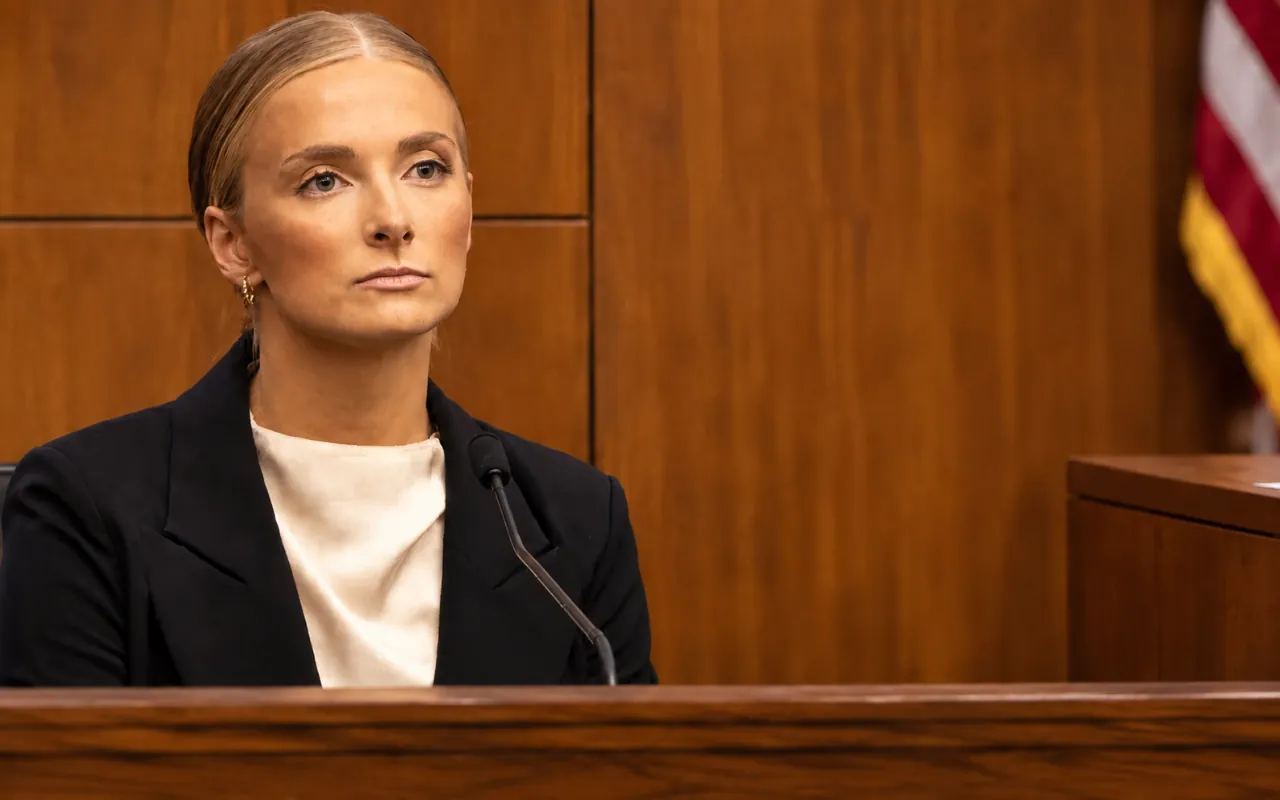
In court, ICU nurse Meghan Collins was questioned about her observations, documentation, and role in caring for Clancy, putting years-old nursing care under scrutiny.
Clancy was charged with three counts of first-degree murder in the January 2023 deaths of her children, Cora, 5, Dawson, 3, and Callan, 8 months. There was no dispute at trial that Clancy killed the children. The central question was whether she was legally responsible for her actions or was so profoundly mentally ill that Massachusetts law did not permit the jury to hold her criminally accountable.
Twelve jurors could not unanimously answer that question, and Superior Court Judge William Sullivan declared a mistrial. A mistrial is neither an acquittal nor a conviction.
For nurses, Collins’ appearance on the witness stand offered a rare public look at something that can happen far beyond a high-profile criminal trial: A nurse may be asked months or years later to explain what they observed, what they did, what they documented and what they remember about a patient.
“Nurses should consider how the care they provide, the decisions they make and what they document can later become important in legal proceedings,” said Lynn Pierce, MSN, APRN, FNP-C, senior risk manager with Nurses Service Organization (NSO). “Depending upon the facts and information revealed, testimony can directly influence the outcome of a case.”
Collins’ testimony highlights three areas nurses may not think about until they face a legal proceeding themselves: the strength of their documentation, the boundaries of their role, and how they prepare to testify.
Your Documentation May Have to Speak for You Years Later
Collins’ testimony also illustrates the challenge of time.
“A nurse may be asked to recall details of the care they delivered to a patient months or even years after it was provided. Nurses should document patient care at the time it is provided; it can be easy to forget specific details if not documented at the time the care was provided,” Pierce said.
Without factual and accurate documentation, she added, it can be difficult to recall exactly what happened months ago, let alone years earlier.
Strong nursing documentation should be accurate, objective, and complete. Nurses should document what they see, hear and do and make sure their notes sufficiently detail the care provided, Pierce said.
Even seemingly routine charting habits can become consequential when attorneys begin examining individual words in a medical record.
Pierce advises nurses not to use shorthand or abbreviations that are not widely accepted or approved by their facility. Subjective descriptions such as “bed soaked” or “a large amount” should also be avoided.
Nurses should never document care before providing it because circumstances can change, and charting care that has not occurred is considered fraud. Pierce also advises against repetitive copying and pasting and leaving gaps in documentation.
“Frequent errors and errors of omission can undermine a nurse’s credibility in court,” Pierce said. “Complete, accurate documentation reflects a nurse’s practice and is a tool that can help defend the nurse in case of legal action.”
Know the Boundaries of Your Role
Collins was also questioned about what she personally observed and did while caring for Clancy, highlighting another distinction that can become critical when a nurse is questioned under oath.
Nurses should be clear about what they personally observed and did, what appears in the healthcare record and what they independently remember, Pierce said.
They should also avoid offering opinions or conclusions that go beyond their role or expertise.
“If the answer to a question is not known, do not guess or attempt to assume you know the answer,” Pierce said. “If a nurse does not remember something, they should say so. Nurses should answer only the question asked and not anticipate further questions.”
Those boundaries begin long before a nurse enters a courtroom. Nursing documentation should be objective and should not include inappropriate subjective opinions, conclusions, or derogatory statements about patients, colleagues, or other members of the care team.
Nurses should know and practice within their state’s scope of practice act, the standard of care, and state board of nursing requirements.
Patient advocacy remains part of that responsibility. Nurses should advocate for patient safety and quality care while working within their employer’s policies and procedures and the boundaries of their scope.
When a Nurse Becomes a Witness
For a nurse who receives a subpoena related to a former patient, Pierce’s first advice is simple: Do not ignore it.
That applies whether the subpoena involves releasing healthcare records, appearing for a deposition or testifying in court.
A nurse should notify their professional liability insurance provider and their employer’s risk manager or legal counsel and prepare with their attorney before a deposition, Pierce said.
If the nurse has little or no independent recollection of the patient, preparation should not involve trying to reconstruct a memory.
“If the nurse does not independently remember the patient or a specific aspect of the care, guessing or attempting to recreate a memory is never a good idea,” Pierce said.
Instead, the healthcare record may become critical. If a nurse needs to consult it to answer a question, Pierce said they can request to see the record before responding.
How to Handle the Witness Stand
Testifying can put nurses in an unfamiliar position. Attorneys may challenge their recollection, focus closely on individual words in the chart, or ask similar questions in different ways.
Pierce advises nurses to listen carefully and think before speaking rather than feeling pressured to respond immediately. They should speak clearly, remain courteous, and answer the question that was asked.
If a question is unclear, ask for clarification or ask that it be rephrased. If an attorney asks something outside the nurse’s expertise, the nurse should remain within their scope rather than offering an opinion they are not qualified to provide.
During a deposition, Pierce said a plaintiff’s attorney may use complex or aggressive questioning techniques. Nurses should remain calm and answer truthfully without volunteering additional or extraneous information.
They should also allow their attorney time to interject or object to an improper question. If their attorney objects, the nurse should stop speaking.
What Nurses Should Remember
Most nurses will never testify in a murder trial attracting the level of attention surrounding the Clancy case. But nursing care can be scrutinized in criminal proceedings, malpractice litigation, depositions and licensing board actions.
Pierce points to three lessons for nurses: document completely and accurately, understand the boundaries of your scope, and prepare with an attorney before giving testimony.
And when memory fails, nurses should not try to fill in the blanks.
“It is perfectly appropriate to answer any question with the phrase, ‘I do not recall’, if you can’t remember specific details,” Pierce said. “If you do not remember something, say so.”
For nurses accustomed to documenting hundreds of assessments, conversations and interventions as part of everyday clinical practice, the lesson from seeing one nurse’s care examined years later is clear: What feels routine during a shift may not seem routine when someone asks you to explain it under oath.
