
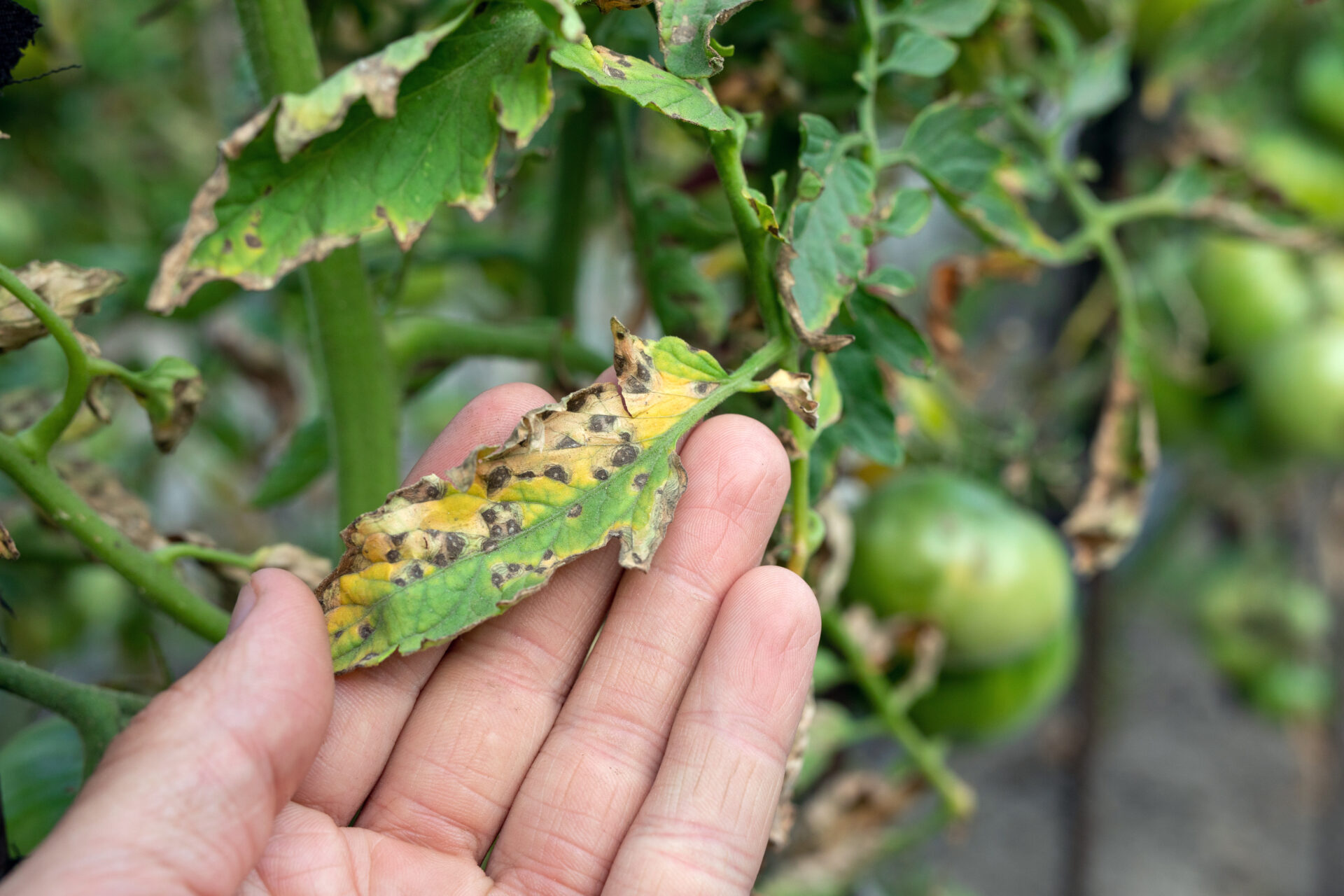

From rising food prices to supply chain disruptions, the effects of crop disease reach far beyond the farm. Fungal diseases destroy billions of dollars’ worth of crops each year, threatening global food security while becoming increasingly resistant to traditional fungicides. As scientists search for more effective ways to protect the world’s food supply, new research suggests they may have found a promising strategy to stop crop diseases before they take hold starting with the waxy surface of a leaf.
The findings, published in Biointerphases, suggest that understanding how fungal pathogens recognize and interact with a plant’s natural protective coating could one day help researchers develop more targeted, sustainable ways to prevent crop infections. If successful, the approach could reduce reliance on chemical fungicides while helping safeguard the crops that billions of people depend on for food.
Why fungal crop diseases are a growing concern
Fungal diseases are among the most destructive threats to global agriculture, affecting staple crops such as wheat, barley, rice, and other grains that feed populations around the world. According to the Food and Agriculture Organization of the United Nations, plant pests and diseases are responsible for the loss of up to 40% of global food crops each year, contributing to economic losses exceeding $220 billion annually.
As global temperatures rise and weather patterns become more unpredictable, many experts warn that fungal diseases are becoming more widespread and difficult to control. At the same time, repeated use of fungicides has contributed to increasing resistance among many plant pathogens, reducing the effectiveness of some of agriculture’s most important disease-fighting tools.
The challenge mirrors a familiar issue in healthcare, where the overuse of antimicrobial medications has contributed to growing resistance and fewer effective treatment options.
Looking at where infection begins
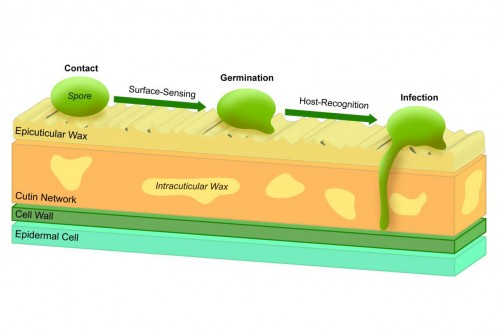
Researchers from the University of Adelaide decided to investigate the earliest stage of infection rather than focusing solely on treating disease after it develops. Their attention turned to the plant cuticle, the thin, waxy coating that covers leaves and serves as the plant’s first protective barrier against the environment.
While the cuticle helps plants retain moisture and shields them from environmental stress, scientists have increasingly suspected that it also plays another role. The microscopic chemicals found within the wax may act as recognition signals that tell fungal spores they have landed on a suitable host.
To test that theory, researchers transferred leaf cuticle wax onto artificial, non-biological surfaces. This allowed them to study the chemical properties of the wax independently from the leaf’s physical structure. The team found that two different species of powdery mildew were able to germinate on the wax-coated surfaces, demonstrating that the wax itself plays an important role in the earliest stages of fungal growth.
A shift from treatment to prevention
Rather than relying primarily on repeated fungicide applications, researchers believe future crop protection strategies could focus on preventing fungal pathogens from recognizing their host in the first place.
If scientists can identify the specific chemical signals that trigger fungal spores to germinate, they may eventually be able to block or disrupt those signals before infection becomes established. The concept represents a shift toward precision prevention addressing disease at its earliest point instead of responding after damage has already occurred.
More than chemistry alone
The researchers caution that leaf wax is only one part of a much larger puzzle. Whether fungal spores successfully infect a plant also depends on several additional factors, including leaf texture, surface roughness, moisture, temperature, humidity, and other environmental conditions.
Future research will require collaboration among plant scientists, chemists, fungal pathologists, and materials scientists to better understand how these factors work together and how they might be manipulated to prevent disease without relying heavily on chemical fungicides.
Why healthcare professionals should care
Although the research focuses on plants, its implications extend well beyond agriculture. Food security is a cornerstone of public health. Healthy crops support stable food supplies, improve access to nutritious foods, strengthen economies, and help communities withstand environmental and climate-related challenges.
Reducing dependence on fungicides may also lessen environmental chemical exposure while supporting more sustainable agricultural practices. The study also reflects a broader principle that healthcare professionals understand well: preventing disease before it starts is often more effective than treating it after it has taken hold.
Researchers hope that by understanding the microscopic signals exchanged between plants and fungal pathogens, they can develop innovative approaches that protect crops, strengthen food security, and help meet the growing nutritional needs of an expanding global population.
“Ultimately, the goal is to prevent fungal pathogens from recognizing their host in the first place,” Bryan Coad, lead author and Associate Professor at the School of Agriculture, Food and Wine, the University of Adelaid said in a statement. “If we can understand the surface signals that trigger infection, we can begin developing strategies to disrupt or block those signals before disease becomes established.
