

In Houston, care is coming to the patient.
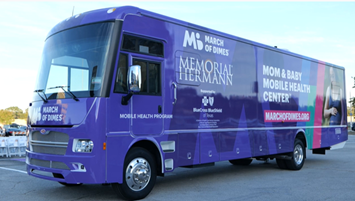
One year after its launch, the Mom & Baby Mobile Health Center, led by Memorial Hermann Health System in collaboration with March of Dimes and Blue Cross Blue Shield, is delivering prenatal, postpartum, and newborn care directly into underserved communities across Harris County.
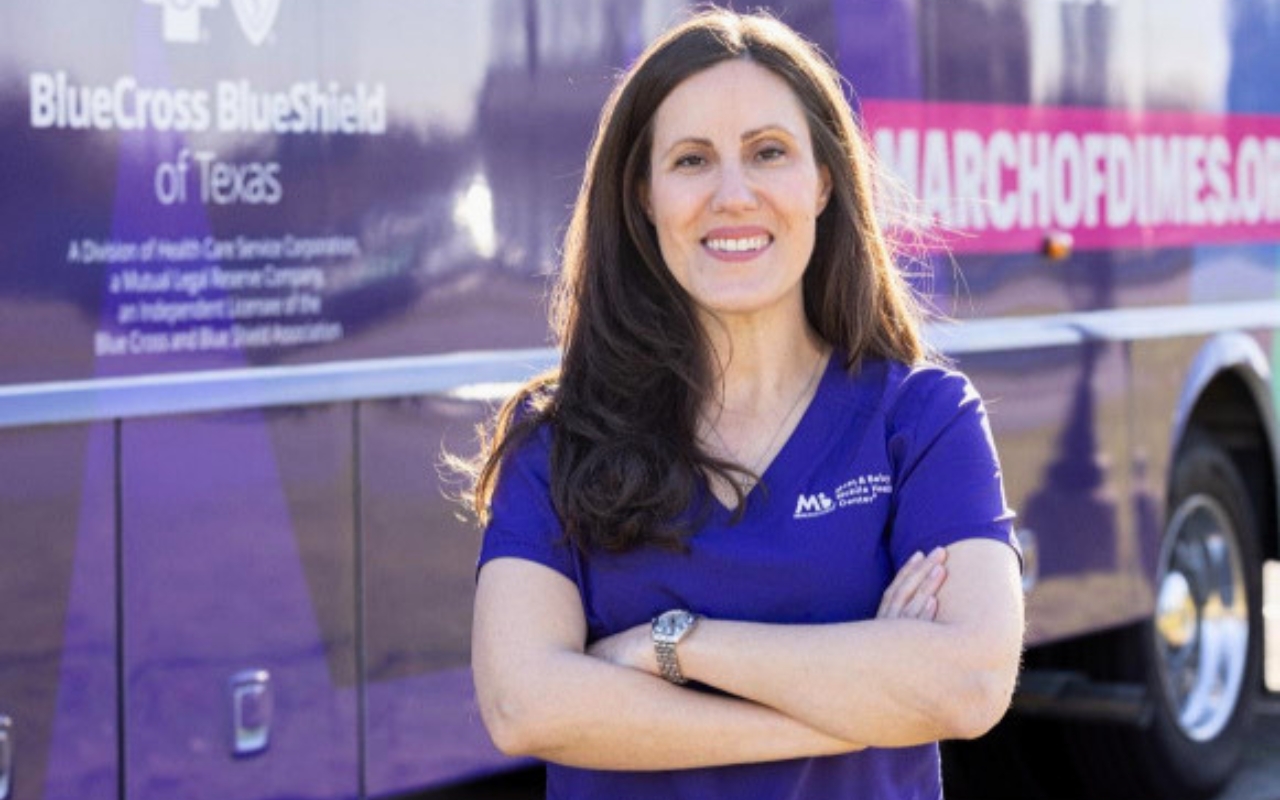
For Paresa Alizadeh, FNP-C, the work is both highly clinical and deeply personal.
The Mom & Baby Mobile Health Center delivers free prenatal, postpartum, and newborn care directly to underserved communities in Houston, reducing barriers like cost, transportation, and delayed access while helping improve maternal and infant outcomes.
A Clinic on Wheels, Built for Access
Launched in 2024, the mobile unit functions as a medical home for women and newborns, offering services from well-woman exams and prenatal labs to newborn assessments and postpartum care. The clinic serves uninsured and underinsured patients, many of whom have gone years without consistent healthcare.
Each day begins with logistics that differ significantly from a traditional clinic.
“The team consists of myself and two medical assistants. We also have two experienced drivers who rotate,” says Alizadeh. “We meet as a team and travel to the site we will be at for the day. When we arrive at the site we have to set up both exam rooms as well as the laboratory.”
Operating a mobile clinic requires careful planning.
“Being on a mobile clinic is different from practicing in a traditional clinic because we have to make sure we are prepared for the day,” she explains. “On the mobile clinic keeping items stocked is a must because we cannot go back.”
From temperature-sensitive lab materials to satellite-based internet connectivity, even small details can impact care delivery.
“We learned the mobile clinic cannot be parked and set up underneath trees because we will not be able to connect to the Starlink.”
Who the Mobile Clinic Serves and Why It Matters
The patients seen on the mobile unit often face multiple barriers to care.
“On the mobile clinic we serve uninsured patients. Patients have often gone years without medical care,” says Alizadeh. “There are many women who do not have $25 or $35 for an office visit.”
All services are provided free of charge, including labs, cultures, and procedures.
For many patients, proximity is what makes care possible.
“A lot of our patients walk to their appointments,” she says. “Many choose to walk because we are able to provide care within their community close to home and work.”
Access challenges go beyond cost. Even scheduling prenatal care can be difficult.
“OBGYN offices often require patients to submit medical records prior to even being scheduled for an appointment,” Alizadeh explains. “Without transportation or access to a fax machine or internet, this can turn into a huge barrier.”
The mobile clinic helps close these gaps by offering pregnancy confirmations, prenatal and postpartum visits, newborn care, and gynecologic services in one accessible setting.
A Patient Story That Defines the Mission
One patient encounter captures why this model matters.
“We cared for a patient who presented after nearly 9 years without health care,” Alizadeh shares. “She stumbled upon the March of Dimes Mom and Baby Mobile Health Clinic while taking a walk one day in her community.”
After a well-woman exam and Pap smear, results revealed a serious abnormality.
“Unfortunately, the PAP results came back abnormal for High-Grade Squamous Intraepithelial Lesion with possible invasion,” she says.
The patient faced multiple barriers, including no phone, limited finances, and no reliable transportation.
Still, proximity to the mobile clinic made follow-up possible.
“Since the patient does not have a working phone, she is unable to make appointments for herself. Due to her PAP results she needed a colposcopy. We called local community health clinics and we were able to find her an appointment for a colposcopy 3 days later.”
Support extended beyond clinical care.
“She has stopped by several times for emotional support and we have offered prayers as her results are pending. It’s an honor to serve the community and for patients to know that we are here to support them throughout a very difficult journey.”
Without the mobile clinic, that care pathway may never have started.
“Without the mobile clinic being in her community, she would have most likely not been able to pay the cost of a WWE and PAP. Hopefully, we have helped spare a patient from cervical cancer.”
Addressing Maternal Health Disparities in Harris County
The need for accessible maternal care is urgent. A 2024 report from Harris County Public Health found that maternal mortality among Black women reached 65 deaths per 100,000 live births, more than double the overall county rate.
Disparities also appear in chronic conditions and delayed care.
“We often see higher prevalence of hypertension, diabetes, and obesity that were not adequately managed before pregnancy,” says Alizadeh.
In practice, this often means patients enter care later than recommended.
“Some patients arrive for their first prenatal visit well into the second or third trimester,” she notes.
The mobile clinic model helps shift that pattern by bringing care directly into communities.
“The mobile unit has helped change the trajectory by bringing care directly to communities instead of requiring patients to travel across a large county like Harris County,” she says. “Earlier prenatal engagement can be achieved.”
The program also supports continuity by connecting patients to larger systems, including delivery care and specialty referrals.
Why Early Intervention Is Critical
Rising rates of pre-pregnancy diabetes and hypertension are increasing risks for both mothers and babies.
“Early detection and treatment of conditions like gestational diabetes and preeclampsia can make a major difference in preventing serious complications,” Alizadeh explains.
Early identification allows providers to intervene before conditions escalate.
“Blood sugars and blood pressures can be controlled sooner,” she says, noting this can help prevent complications such as stroke, organ damage, and emergency delivery.
The impact extends to newborn outcomes.
“In gestational diabetes, uncontrolled blood sugars can cause the baby to grow too large,” she says. “Managing glucose helps keep growth in a healthy range.”
Practicing at the Top of License in a Mobile Setting
Delivering care in a mobile unit requires adaptability and strong clinical judgment.
“First and foremost, the most important clinical skill is the ability to listen to a patient’s concerns,” Alizadeh says. “I strongly believe most errors in medicine can be prevented if we slow down and take the time to listen.”
Trust-building is equally essential.
“Patients had a hard time believing our services were truly free of charge,” she says. “However, word of mouth has occurred and we are quickly establishing trust within the community.”
The role also demands confidence in decision-making.
“At the end of the day I have to have the confidence to make critical decisions for the safety of my patients,” she says. “If I cannot safely provide care for them, then I owe them my honesty and a referral to a higher level of care.”
One Year In: Early Impact and What Comes Next
After its first year, the mobile clinic is already demonstrating meaningful impact.
“We have treated many STDs and prevented the disease from continuing to spread in our communities,” says Alizadeh.
The team has also identified serious conditions early and helped patients navigate follow-up care.
“These women were spared from cervical cancer because they had access to our mobile clinic,” she says.
For pregnant patients who might otherwise go without care, the clinic has become a critical support system.
“These patients have become family,” she says. “During their most vulnerable time we were there to hold their hand, share in their emotions and truly provided them a fun pregnancy.”
The Bigger Picture for Nursing and Health Systems
Mobile maternal care is emerging as a practical strategy to improve access and outcomes.
“Early intervention turns high-risk conditions into manageable ones, greatly improving outcomes for both mother and child,” says Alizadeh.
Her message is clear.
“The medical community must continue to work together to reduce or eliminate all barriers to healthcare,” she says. “It is my honor to serve my patients and establish their trust.”
