

Estimated reading time: 5 minutes
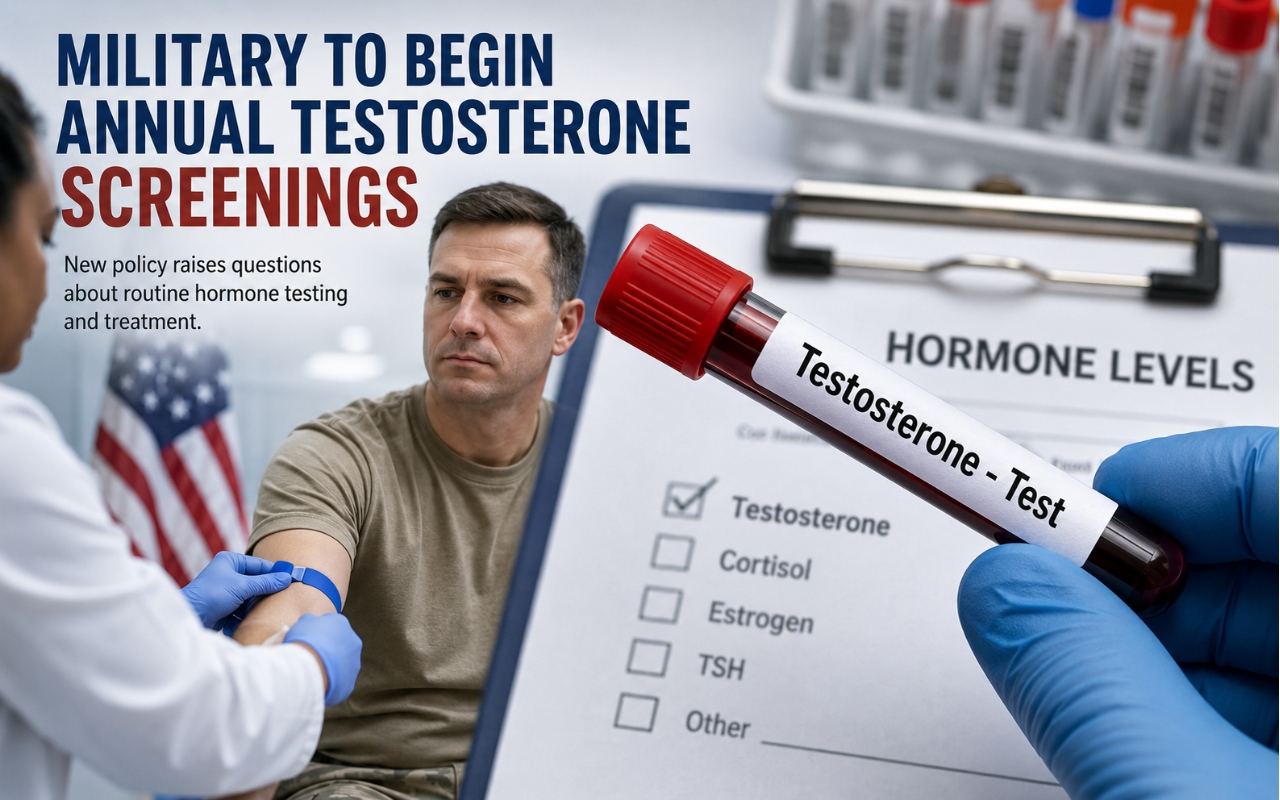
The U.S. Department of Defense will begin annual testosterone screenings for active-duty service members age 30 and older, a policy that is drawing praise for increasing attention to men’s health while prompting debate over whether healthy men should undergo routine hormone testing.
For nurses and nurse practitioners working in primary care, endocrinology, men’s health, and military or veteran healthcare, the policy could lead to more patient questions about testosterone testing, interpreting hormone levels, and the potential benefits and risks of testosterone replacement therapy.
Defense Secretary Pete Hegseth announced the policy last week, saying the initiative is intended to help ensure service members have the hormone levels needed to perform at their “absolute best.” Under the plan, troops aged 30 and older will undergo annual screening for testosterone deficiency as part of their routine health assessments, while service members under age 30 may voluntarily opt into testing. Service members with low testosterone levels may undergo further evaluation and, if appropriate, be offered testosterone replacement therapy (TRT).
The initiative comes as federal health officials consider broader changes to testosterone therapy labeling that could expand access to treatment for men experiencing age-related declines in testosterone levels. While some experts welcome increased attention to men’s health, others caution that routine screening of asymptomatic individuals may lead to overdiagnosis, unnecessary treatment, and an overreliance on laboratory values rather than a patient’s overall clinical picture.
Why Some Experts Are Concerned About Routine Testosterone Screening
Testosterone levels naturally decline with age, and lower levels do not always indicate a medical condition requiring treatment.
Major medical organizations, including the American Urological Association and the Endocrine Society, generally recommend testing for low testosterone in men who have symptoms consistent with testosterone deficiency rather than screening asymptomatic individuals.
Symptoms that may warrant evaluation include:
- Decreased libido
- Erectile dysfunction
- Fatigue
- Loss of muscle mass
- Reduced bone density
- Depressed mood
- Difficulty concentrating
Experts also emphasize an important principle of medicine: clinicians treat patients, not numbers.
A low laboratory value alone is not enough to diagnose testosterone deficiency or determine whether treatment is appropriate. Testosterone levels fluctuate throughout the day and can be temporarily affected by factors such as illness, stress, poor sleep, obesity, certain medications, and untreated medical conditions.
Clinical guidelines emphasize that testosterone levels should be interpreted within the context of a patient’s symptoms and overall clinical picture.
Two men with the same testosterone level may have very different clinical presentations. One may experience significant symptoms that affect quality of life, while another may feel completely well.
For that reason, diagnosing testosterone deficiency typically requires both symptoms consistent with low testosterone and repeatedly low morning testosterone levels confirmed through appropriate testing. In some cases, additional factors including free testosterone levels, sex hormone-binding globulin (SHBG), age, medications, and an individual’s overall clinical picture may also need to be considered before determining whether treatment is appropriate.
The Risks of Overdiagnosis and Overtreatment
Some healthcare providers worry that broad screening programs could identify men with age-related hormonal changes who may never develop symptoms or benefit from treatment.
Critics of routine screening in asymptomatic individuals caution that abnormal laboratory findings can sometimes lead to additional testing, unnecessary anxiety, and treatment decisions that may not improve health outcomes.
Testosterone replacement therapy is not without risks and requires ongoing monitoring. Potential concerns include:
- Infertility and reduced sperm production
- Increased red blood cell counts, which can raise the risk of blood clots
- Worsening sleep apnea
- Acne and fluid retention
- Suppression of the body’s natural testosterone production
- Possible cardiovascular risks in certain populations
Research presented at ENDO 2026 also found that testosterone therapy is sometimes prescribed without appropriate diagnostic evaluation or consistent adherence to clinical guidelines.
The military’s new screening initiative is likely to intensify an ongoing debate within medicine: When does age-related testosterone decline represent a condition that warrants treatment, and when might it simply reflect a normal part of aging?
What About Hormone Screening for Women?
Although the Defense Department’s announcement focuses on testosterone screening in men, it has also prompted broader discussion about hormone health in women. Unlike testosterone deficiency in men, routine hormone testing is not recommended for healthy women without symptoms. Instead, hormone evaluation is generally reserved for specific clinical concerns such as infertility, irregular menstrual cycles, premature menopause, suspected endocrine disorders, or certain severe menopausal symptoms.
However, unlike testosterone screening in men, there are currently no recommendations for routine estrogen screening in healthy women without symptoms.
Hormone testing in women is generally reserved for specific clinical concerns, including:
- Irregular menstrual cycles
- Infertility
- Suspected endocrine disorders
- Premature menopause
- Certain severe menopausal symptoms
Some experts say the announcement could spark broader conversations about how the healthcare system approaches hormone health across the lifespan and whether similar investments should be made in addressing menopause, perimenopause, and other hormone-related concerns affecting women.
What Nurses Should Know
As questions about testosterone testing become more common, nurses and nurse practitioners can play an important role in patient education and care. Key points include:
- Major clinical guidelines generally recommend testosterone testing for men with symptoms of testosterone deficiency rather than routine screening of asymptomatic individuals.
- Diagnosis of testosterone deficiency typically requires both symptoms and repeatedly low morning testosterone levels.
- Testosterone replacement therapy requires ongoing monitoring for potential adverse effects.
- Patient education should include discussions about the potential benefits and risks of therapy, fertility considerations, and the importance of follow-up care.
Why This Matters
The military’s new screening program could shape broader conversations about men’s health, hormone testing, and the growing interest in testosterone therapy.
It also highlights an ongoing debate in medicine: when does age-related testosterone decline warrant treatment, and when might screening healthy, asymptomatic individuals create more harm than benefit?
Whether the military’s screening program leads to earlier diagnosis of clinically significant testosterone deficiency or increases unnecessary testing remains unclear. As the policy is implemented, its impact on patient outcomes, treatment decisions, and future discussions about hormone screening will likely be closely watched by clinicians, researchers, and policymakers.
