



Nearly one in three Americans over age 50 is caring for an adult with a health condition or disability. Many are doing it without the support, financial stability, or resources they need.
A new national poll from the University of Michigan National Poll on Healthy Aging points to a growing strain on unpaid caregivers and a widening gap in support that could directly impact patient care and long-term health outcomes.
What Did the New Caregiving Poll Find?
A national poll found that 32% of adults over age 50 provide care to someone with a health condition or disability, while 17% say they lack the support needed. Caregivers without support from friends or family are significantly more likely to experience financial strain and unmet needs.
Caregiving is Widespread and Often Unsupported
The poll shows:
- 32% of adults over 50 served as caregivers in the past year
- 22% cared for someone outside their household
- 12% cared for someone they live with
Yet 17% say they do not have the support they need.
The gap is sharper for those without personal support systems. Among caregivers who lack close friends or family to rely on, 41% report not having enough support, compared to 11% of those who do.
“This is an issue we need to keep our eyes on as our nation continues to grapple with the growing demand for unpaid, untrained caregiving for older adults and for people with disabilities and serious health needs,” said Florence Johnson, PhD, MSN, MHA, an Assistant Professor in the University of Michigan School of Nursing and member of Institute for Healthcare Policy and Innovation (IHPI). “Our poll shows that 23% of all people over 50, including many who are already caregivers for one or more adults, may lack family or friends to help them if they needed support with health needs. But they may not know where or how to find services.”
Financial Pressure Is a Major Driver
Caregiving often comes with a financial cost.
- 34% of caregivers report financial challenges
- 40% of those ages 50 to 64 report financial strain
- 27% of those over 65 report the same
Among caregivers without support systems, nearly half (47%) report financial hardship.
When asked what would help most, 69% of caregivers who feel unsupported pointed to financial assistance or subsidies.
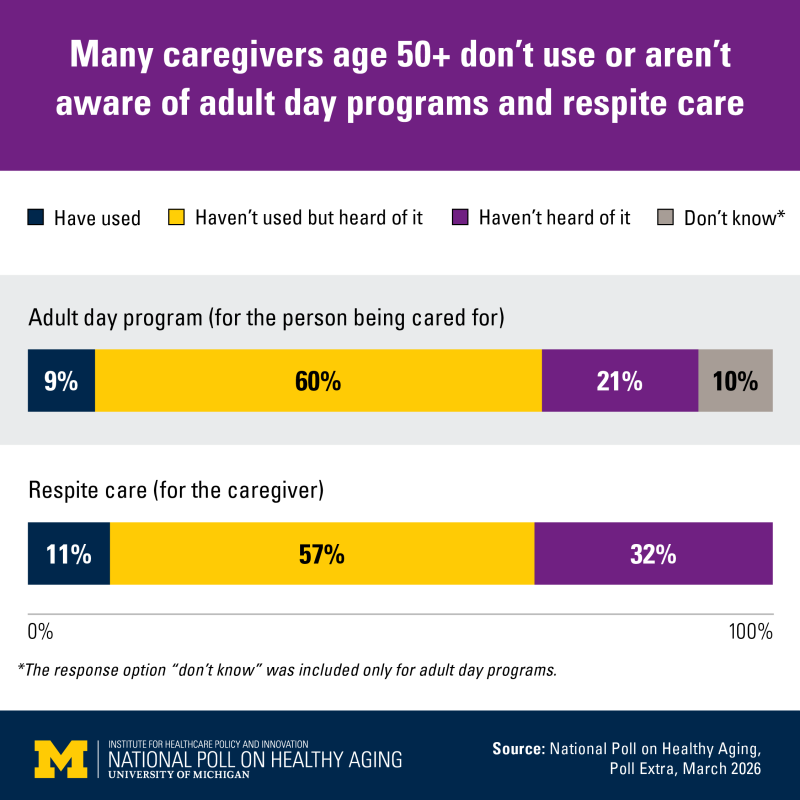
Most Caregivers Are Not Using Available Support
Despite the burden, many caregivers are not using programs designed to help.
Adult Day Programs
Only 9% report using them.
60% have heard of them but have not used them.
21% have never heard of them.
These programs provide structured care for several hours to a full day, giving caregivers time to manage work, rest, or other responsibilities.
Respite Care
Only 11% of caregivers have used respite care.
57% have heard of it but have not used it.
32% have never heard of it.
Among caregivers who feel unsupported, 39% say respite care would help most.
Among those who have used it, 33% say they used it to take time for themselves, and 33% say it helped relieve stress and prevent burnout.
What Nurses and Care Teams Need to Know
The findings point to a clear role for nurses and healthcare teams.
Caregivers are often managing complex responsibilities with little support. That strain can affect their own health and their ability to care for others.
Poll director Jeffrey Kullgren, MD, MPH, MS, Associate Professor of Internal Medicine at the University of Michigan Medical School, emphasized the importance of provider awareness.
“We see a real awareness gap here, and health care providers can help by making sure that information about local resources is available in waiting areas, patient education packets, and more,” he said.
“If our patients are feeling unsupported or stressed as caregivers, it can affect their own mental and physical health, and their ability to keep up with healthy habits that are important for long-term healthy aging,” he added. “Making sure they know about adult day programs and respite care could be a way to help them make caregiving sustainable.”
For nurses, this means:
- Identifying patients who are caregivers
- Recognizing signs of caregiver strain
- Connecting families to local resources such as Area Agencies on Aging
- Including caregiver support in care planning and discharge education
Michigan Data Reflects the Same Trends
State-level data mirrors national findings.
In Michigan:
- 31% of adults over 50 serve as caregivers
- 33% report financial challenges
- 17% lack adequate support
Additionally, 19% of caregivers and 23% of adults over 50 report lacking a support system.
Use of support programs remains low:
- 10% have used adult day programs
- 15% have used respite care
Yet 35% of caregivers who need support say respite care would help most.
The Bottom Line
Unpaid caregivers are playing an increasingly important role in care delivery, often without the support they need.
For nurses and healthcare systems, recognizing and addressing caregiver needs is vital for maintaining the health of older adults, caregivers, and the broader community.
